Eating Out in Yerevan – Armenian Food, Restaurants & Where to Eat
Contents
- Essential Armenian Dishes to Try
- Khorovats
- Lavash
- Dolma
- Manti
- Harissa
- Matsun (Armenian Yoghurt)
- Basturma and Sujuk
- Armenian Cognac
- Best Areas to Eat in Yerevan
- Around the Cascade and Abovyan Street
- Northern Avenue
- GUM Market (Covered Market)
- Mashtots Avenue Area
- Republic Square Area
- Practical Notes for Eating in Yerevan
- Beyond Yerevan
Yerevan’s food scene is better than most people expect. The city has a strong café culture, a growing number of serious restaurants, and a foundation of Armenian cuisine that is genuinely distinct — shaped by geography, ancient agriculture, and a diaspora that spread Armenian cooking traditions worldwide. This guide covers what to eat, where to find the best food, and how to navigate the city’s dining options.
Essential Armenian Dishes to Try
Khorovats
Khorovats is Armenian barbecue — marinated meat (most commonly pork, but also lamb and chicken) cooked over an open wood or charcoal fire, usually on skewers. It’s the centrepiece of any Armenian gathering, and a well-made khorovats is genuinely hard to beat. Look for places that cook over wood rather than charcoal for the most authentic flavour. Served with lavash, raw onion, herbs, and sometimes a simple tomato salad.
Lavash
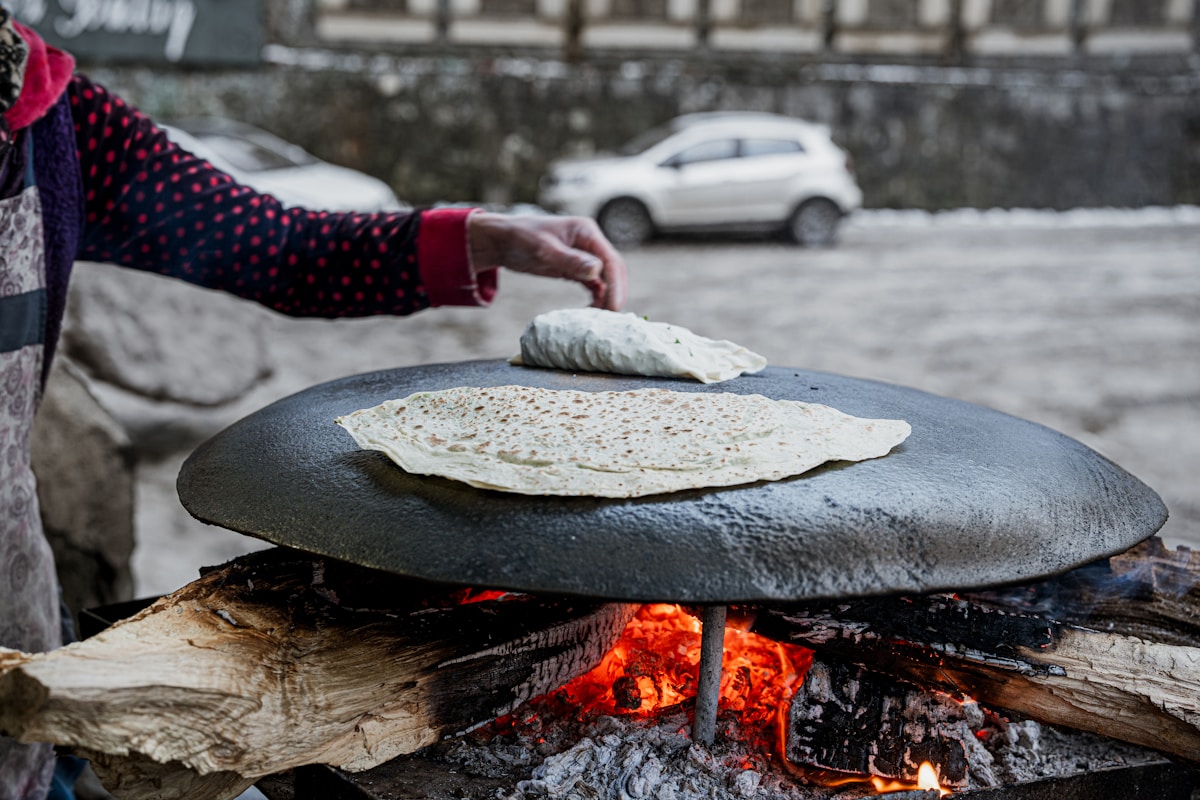
Lavash is the thin, unleavened flatbread that appears at almost every meal in Armenia. It’s baked on the walls of a traditional clay oven (tonir) and can be paper-thin and slightly crispy when fresh, or soft and pliable after a day or two. In 2014 UNESCO added lavash baking to its Intangible Cultural Heritage list. You can buy fresh lavash from street bakeries and market stalls — eating it straight from the oven with cheese or herbs is one of the simple pleasures of being in Yerevan.
Dolma
Dolma refers to a range of stuffed dishes — the most common is grape leaves filled with a mixture of minced meat, rice, herbs, and spices, then simmered. There are also vegetable dolma (stuffed peppers, aubergine, courgette), and seasonal versions using young vine leaves in spring. A proper dolma platter, served with yoghurt or matsun, is a filling and satisfying meal.
Manti
Manti are small baked or boiled dumplings filled with spiced minced meat, typically served in a broth with yoghurt and a drizzle of spiced butter. Common across the broader Middle Eastern and Caucasian region, the Armenian version is usually baked first (giving the dumplings a crispy edge) before being finished in liquid. A reliable option for a warming lunch.
Harissa
Harissa is a slow-cooked porridge of wheat and chicken or lamb — one of the oldest dishes in Armenian cuisine, associated with the feast of the Transfiguration. It takes hours to cook properly and is thick, rich, and deeply savoury. Not every restaurant offers it, but it’s worth seeking out, particularly in the colder months.
Matsun (Armenian Yoghurt)
Matsun is strained Armenian yoghurt, thicker and more tart than most commercial versions. It appears as a condiment alongside dolma, khorovats, and grilled meats, and is also eaten on its own with honey or dried fruit for breakfast. The quality is noticeably better when bought from a local dairy or market stall rather than a supermarket.
Basturma and Sujuk
Basturma is air-dried, spiced cured beef — intensely flavoured, slightly earthy, and strongly aromatic from the spice coating (which typically includes fenugreek, paprika, allspice, and black pepper). Sujuk is a dried spiced sausage with a similar flavour profile. Both are eaten sliced thin as a meze or with eggs for breakfast. You’ll find both at the GUM Market.
Armenian Cognac
Armenia’s brandy is one of the most well-regarded in the world. Winston Churchill famously requested a regular supply. The Ararat and Noy brands are the most established; look for 5-year-old (VSOP equivalent) as a minimum for quality. Several bars and restaurants in Yerevan serve it by the glass — a small pour with a piece of dried apricot is a classic way to end a meal.
Best Areas to Eat in Yerevan
Around the Cascade and Abovyan Street
The streets around the Cascade and Abovyan Street have the highest concentration of good mid-range and upper-mid-range restaurants and wine bars. You’ll find Armenian, Georgian, and international cuisine here, alongside some of the city’s better cocktail bars. Good for dinner; gets busy on weekend evenings.
Northern Avenue
The Northern Avenue pedestrian boulevard runs from the Opera House toward Republic Square and is lined with cafés, casual restaurants, and fast-food options. Standards vary — it’s more of a place to have a coffee or a snack than a destination dining area. Good for a quick lunch between sightseeing.
GUM Market (Covered Market)
The GUM Market off Mashtots Avenue is the best place in Yerevan to eat cheaply and authentically. Inside, stalls sell fresh lavash, smoked cheeses, basturma, honey, dried fruits, pickles, and cooked food. Several small eating spots around the market serve simple hot meals — soup, grilled meat, and salads — at prices well below any restaurant. This is where locals shop and eat lunch; it’s worth a visit even if you’re not hungry.
Mashtots Avenue Area
The streets around Mashtots Avenue between the market and the Cascade have a good range of neighbourhood restaurants and cafés that are popular with locals rather than tourists — typically better value and more direct in service. Worth exploring for lunch.
Republic Square Area
Restaurants immediately around Republic Square tend to price for tourists and foot traffic. There are exceptions, but in general the further you walk from the square, the better the value.
Practical Notes for Eating in Yerevan
- Meal times: Lunch is the main meal of the day for many locals, served roughly 12–3pm. Dinner service starts around 7pm and runs late; it’s common to be seated at 9pm or later on weekends.
- Menus: Most restaurants in the tourist areas have English menus. In neighbourhood places further from the centre, menus may be in Armenian or Russian only — staff can usually help.
- Vegetarian: Armenian cuisine is meat-heavy, but there are vegetarian options — dolma with only vegetables, salads, dairy-based dishes, and grain dishes. Dedicated vegetarian restaurants are rare but growing in number.
- Water: Tap water in Yerevan is safe to drink and considered some of the best in the region. Mineral water is widely available if you prefer.
- Paying: Most restaurants now accept card payments; smaller cafés and market stalls are often cash only. See our Armenia money guide for full details.
- Tipping: 10–15% is standard in sit-down restaurants and appreciated. Not expected in market stalls or casual counter-service spots.
Beyond Yerevan
Armenian food outside the capital follows the same core traditions but with more seasonal and regional variation. In Dilijan, forest-foraged ingredients appear in local cooking. At Lake Sevan, fresh lake fish (ishkhan, or Armenian trout) is the speciality. In the south near Meghri, the subtropical climate produces pomegranates, figs, and walnuts used in distinctly southern dishes.